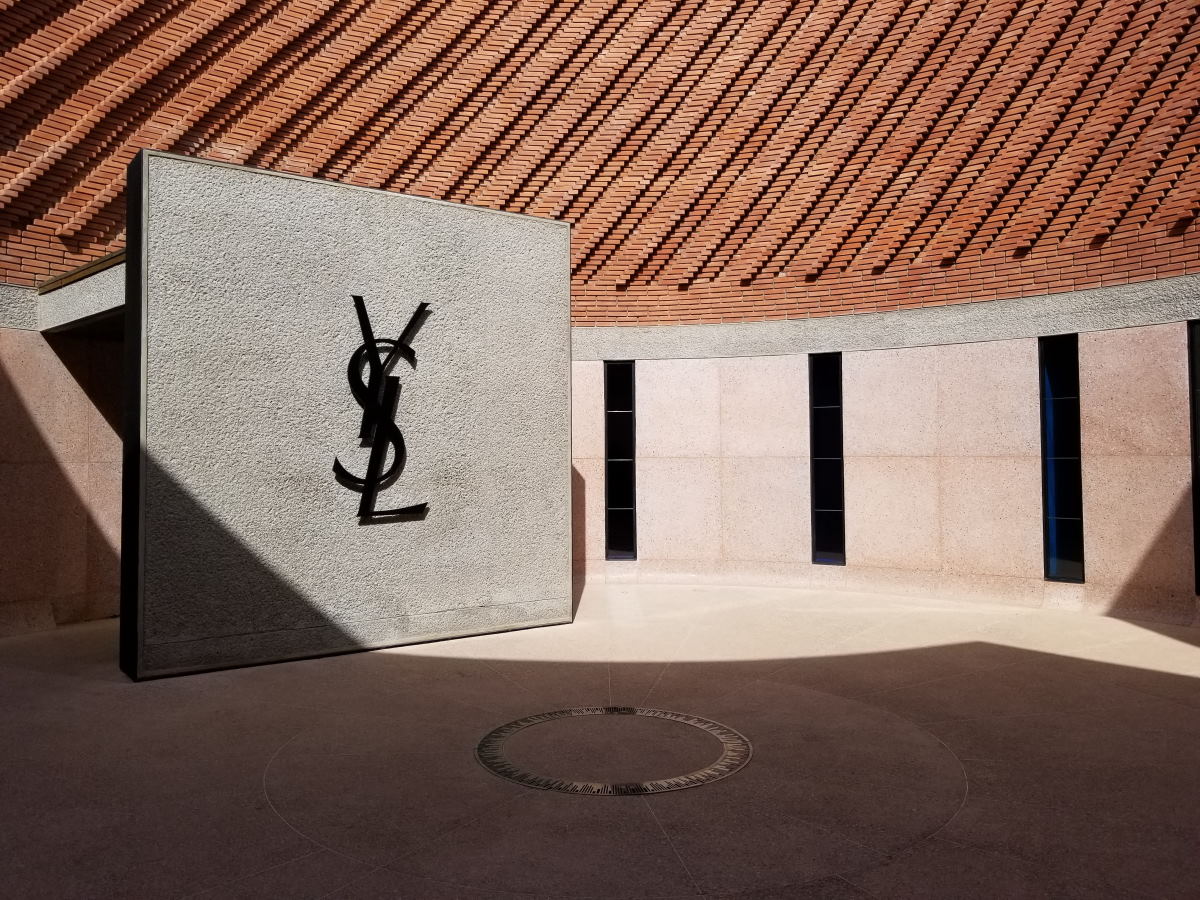
Yves Saint Laurent Museum Marrakech
Marrakech lovers have one more good reason to always visit the city. The Yves Saint Laurent Marrakech Museum opened its doors there in 2017 . Born in Algeria in 1936, Saint Laurent is one of the great geniuses of French haute couture. He began working with the master Christian Dior when he was only 17…
Marrakech lovers have one more good reason to always visit the city. The Yves Saint Laurent Marrakech Museum opened its doors there in 2017 .
Born in Algeria in 1936, Saint Laurent is one of the great geniuses of French haute couture. He began working with the master Christian Dior when he was only 17 years old – and was his main assistant until his death in 1957. At the age of 21, Saint Laurent was then elevated to the position of creative director of the House of Dior!
However, in 1962, at the age of 25, the designer decided to open his own brand. From then on, he created many successes, such as the women’s tux, the Mondrian dress and the saharienne.
In 1966, Yves Saint Laurent went to Morocco for the first time and was enchanted by the colorful Marrakech. The experience was so powerful that he even said: “Before Marrakech, everything was black. Marrakech taught me how to use color.” And the changes came. Paris will remain his creative home, but the inspiration, he says, came from Marrakech.
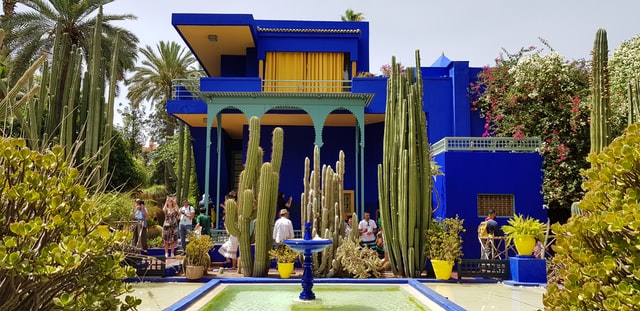
The place that captured the designer’s heart was the Majorelle Garden, created in the 1930s and 1940s by French painter Jacques Majorelle. The huge property, with more than 300 species of plants from five continents, as well as lakes and fountains, was for Saint Laurent like an oasis in the middle of the desert.
The passion was so great that in 1980, the fashion designer and his partner (and former partner) Pierre Bergé decided to buy the Majorelle garden. From then on, Saint Laurent will spend long seasons in the annexed property, which he named Villa Oasis.
History of the museum
In 2010, two years after the death of Yves Saint Laurent, Pierre Bergé organized a major retrospective of his creations in Marrakech. On this occasion, the Princess Consort of Morocco, Lalla Salma, renamed the street of the Majorelle garden “rue Yves Saint Laurent”. The exhibition was so successful that Pierre Bergé decided that Marrakech deserved to have an Yves Saint Laurent museum.
The building was designed by the French firm Studio KO. The terracotta brick facade brings movement reminiscent of the weave of a fabric. Inside, some of the permanent exhibition rooms have black walls against which the colors of Yves Saint Laurent’s clothes vibrate with intensity.
Video
Collection of over 20,000 items
The designer used to say that “a good outfit is a passport to happiness”. Aware of the beauty of his creations, he started, still in 1964, to build an archive of everything that came out of his drawing board, from sketches to prototypes of pieces. And more: jewelry, shoes, gloves, hats. And also: photos, articles published in newspapers and magazines, videos of fashion shows, notebooks with notes on important clients?
All this makes up the Pierre Bergé-Yves Saint Laurent Foundation’s collection, which includes 5,000 garments and 15,000 haute couture accessories. Four thousand objects were sent to the museum in Marrakech, most of which are on display. Recently, another Yves Saint Laurent museum was also opened in Paris, which houses the rest of the collection.
The Yves Saint Laurent Museum in Marrakech also has rooms for temporary exhibitions, a library with more than 5,000 books, a bookstore, a café and an auditorium that can accommodate 150 people.
How to get to the museum
It is open Thursday through Tuesday, 10 a.m. to 6 p.m., and admission costs 100 Moroccan dirhams, the equivalent of $10.
https://www.museeyslmarrakech.com/
Rue Yves St Laurent, Marrakech 40000, Morocco
https://goo.gl/maps/wyWKPsVqigGqHeru8