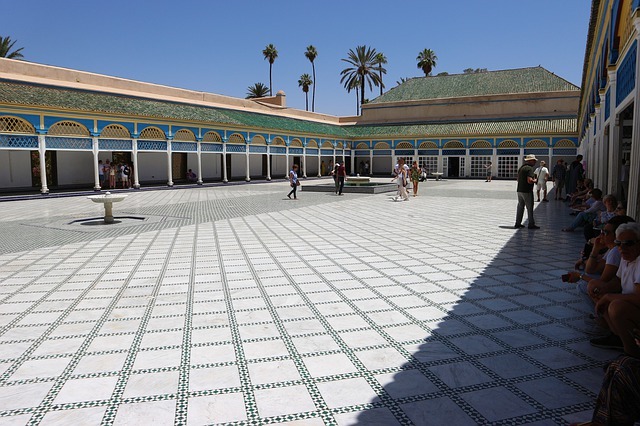

Bert Flint Tiskiwin Museum
Contemporary art is honored here. And it is not less than 2,000 m2, decorated in the purest Moroccan tradition (zelliges, plaster, ceramics, etc.) that are offered to you. Every three months, the contemporary works of art change and a major exhibition is held there for a year. Who is Bert Flint Bert Flint is a…
Contemporary art is honored here. And it is not less than 2,000 m2, decorated in the purest Moroccan tradition (zelliges, plaster, ceramics, etc.) that are offered to you. Every three months, the contemporary works of art change and a major exhibition is held there for a year.
Who is Bert Flint
Bert Flint is a great admirer of Moroccan rural art and has been gathering these precious collections all his life. Born in 1931 in the Netherlands. Teacher at the Mohammed V High School in Marrakech and at the School of Fine Arts in Casablanca. In 1985, he opened his private collection to the public. At the end of 2006, Bert Flint decided to donate a large part of his precious collection to the University of Marrakech.
The museum is housed in the Mnebhi Palace, a splendid nineteenth-century residence of 2,000 square meters located in the center of the Medina near the Smarine souk and the Ben Youssef Medersa. It was only in 1956 that the palace became the property of the State which installed the first girls’ school in the city. Since 1997 it is a museum of contemporary art with various exhibitions throughout the year. This palace was composed of a small open garden around which were four lounges, a kitchen, stables and even a large hammam, one of the pride of the place with its walls in Tadelakt, domes with carved or painted decorations and traditional zelliges.
Unfortunately, over time, this house has deteriorated considerably and it is thanks to the Omar Benjelloun Foundation that we were able to restore it and make it the first private museum in Marrakech. Now, the patio has been covered with a large white canvas forming a huge dome. Most of the floors are made of small ceramic tiles and the whole place is nicely decorated with chandeliers, antique objects, sculpted columns, etc.
In the kitchens and the hammam you can admire contemporary works of art that change every quarter and are often thematic; thus giving many artists the opportunity to exhibit in the best conditions. You can also admire the collection of the PALAIS EL BADI and public or private collections. In the patio and the salons, you will see heritage works of art (ancient coins, costumes, jewelry, musical instruments, carpets, manuscripts, etc.). In addition to the museum, you can also attend concerts, theater and dance performances, and film screenings (if you ask for the program in advance).
Conferences, meetings and workshops are also held there at regular intervals. Since 1999, a bookstore offers art books and exhibition catalogs. Finally, a coffee area awaits you to enjoy a mint tea, a coffee and gazelle horns while watching the exhibitions open to young artists.
Video
It is a high place in the cultural landscape of Marrakech and Morocco as a whole.
How to get to the museum
Open every day from 9am to 12:30pm – 2:30pm to 6pm except on religious holidays.
Entrance fee 30 dirhams (2,8 €, $3).
8 Rue de la Bahia, Marrakech 40000, Morocco