Jemaa El Fna Square
Jemaa El Fna is a unique square in Morocco. Probably in the whole world. In 2001, Jemaa El Fna was distinguished by UNESCO as oral and intangible heritage of humanity, and this, thanks to the initiative led by Juan Goytisolo Spanish writer living in Marrakech and Moroccan intellectuals but also with the support of the…
Jemaa El Fna is a unique square in Morocco. Probably in the whole world. In 2001, Jemaa El Fna was distinguished by UNESCO as oral and intangible heritage of humanity, and this, thanks to the initiative led by Juan Goytisolo Spanish writer living in Marrakech and Moroccan intellectuals but also with the support of the association “Friends of Jamaa El Fna”.
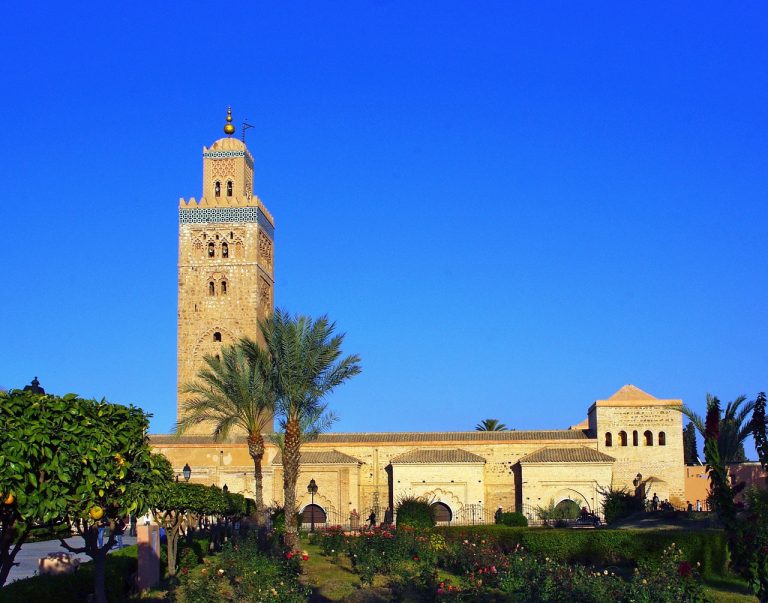
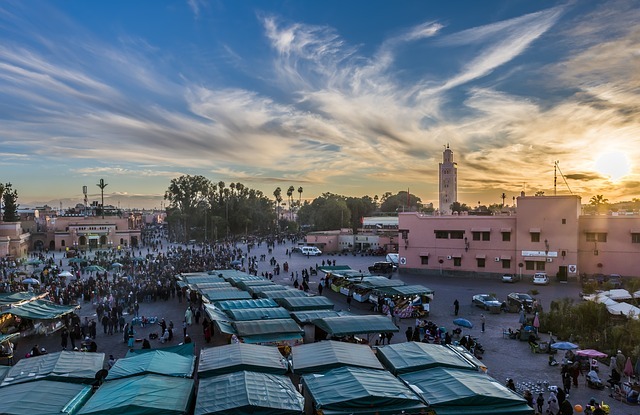
It is located in the heart of the medina of Marrakech, at the foot of the minaret of the Koutoubia and the souks. It is the main meeting point between the old medina and the modern city.
The Jemaa El Fna square is surrounded by stores, cafes, restaurants, hotels and administrative buildings. With its non-stop shows, it is animated at any time of the day. But it is at dusk that it reveals all its splendor.
Jemaa El Fna in history
In terms of history, you should know that the origins of Jemaa El Fna Square are obscure. In historical texts, there are at least two versions that stand out. The first one evokes that it was a “Place of death”, perhaps in memory of the heads of killers and criminals, that the sultan made hang on the ramparts the dark days of execution.
The second one, designates the place of “the destroyed mosque”, where the construction of a huge mosque began without being completed at the end of the XVIth century. The Arabic term Jemaa El Fna contains both meanings.
Video
From the first hours of the day, the merchants set up their goods on a mat or on the ground. You can find everything, the soup merchant, kebabs, grilled sheep heads, the water carrier, always running and waving his bell, will pour you in a shining copper cup, the water of a goat skin wineskin, proud of his impeccable dress, he will offer to take a picture with you. Next to the square, facing the parking lot, heaps of fruit, oranges, tangerines, watermelons, dates, pomegranates, some of which are open, letting out red grains like rubies.
Every day, Gnaoua dance and jump to the rhythm of the drum and qraqeb, Berber orchestras sing their melodies, storytellers take you into the imaginary world of a thousand and one nights …
In the middle of the square, the artists of a vast open-air circus: there, the acrobats of Souss are engaged in balance exercises and somersaults not far away, the snake charmer takes out from a box or a bag of flat-headed reptiles, as big as the wrist; He strikes a tambourine, excites them with his cries, gets them to bite his lips, cheeks or forehead to the point of bleeding, and then, in order to call God’s attention to a listener better dressed than the others, offers, for a few dirhams, to put one of his snakes around his neck.
Of course it is difficult to apprehend all this hodgepodge of images, flavors, sounds without going there.
The nightly animation of this mythical place continues until late at night. In the summer, it is practically until daybreak. If you’re hungry, there are small street restaurants. You can taste the delights of the gastronomy of Marrakech.
How to get to the Square?
Rue El Ksour, 38, Marrakech 40000, Morocco، Marrakesh 40000, Morocco
https://goo.gl/maps/5RwZhkhaWfsSF45MA