El Badii Palace
It is to celebrate his victory in the Battle of the Three Kings that the Saadian Sultan Ahmed el Mansour Ad-dahbi requested in 1578 the construction of the El Badii Palace in Marrakech. The major construction work lasted for sixteen full years, that is to say from 1578 to 1594, some additional work continued until…
It is to celebrate his victory in the Battle of the Three Kings that the Saadian Sultan Ahmed el Mansour Ad-dahbi requested in 1578 the construction of the El Badii Palace in Marrakech. The major construction work lasted for sixteen full years, that is to say from 1578 to 1594, some additional work continued until 1603. The work did not stop day or night, despite a multitude of craftsmen coming from Europe or being in Morocco and despite the abundance of materials imported from the West and the East: from Timbuktu and Europe, from India and Brazil. Accounts agree that the Al Badii Palace was a paradise on the land of Marrakech.
History
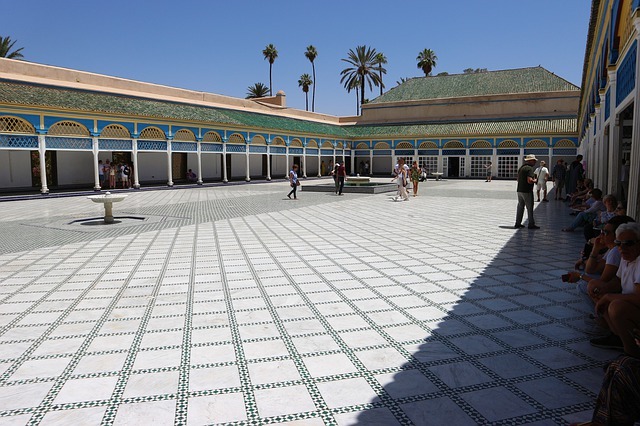
To do so, he did not skimp on the means. Noble materials were acquired from India and China. They went to the four corners of the world to look for the best materials and the best Moroccan craftsmen were solicited. Everything was sumptuous and each room cost a fortune (it is besides with the money of the Portuguese, following the ransom of the prisoners of war of the battle of the three kings about 1578, that this masterpiece was realized). More than 350 rooms made up this megalomaniac palace with prestigious names such as “the crystal pavilion” or “the golden pavilion”, “the turquoise pavilion” or the one with 50 marble columns, and the gardens were not forgotten with superb orange trees; they emerged from the center of the palace, in a courtyard of more than 100 meters long and wide with a large basin of pure water. Result, a palace without common measure.
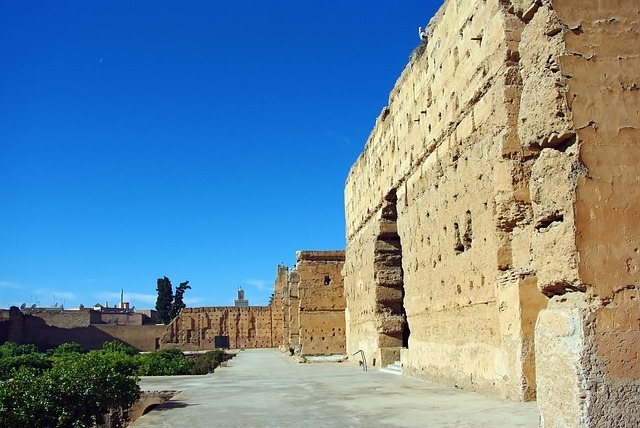
However, the El Badii Palace was destroyed in 1696 by Sultan Moulay Ismaïl. All that abounds in more precious was taken to build the administrative capital, Meknes. It remains of it ruins where one can admire marquetries of any beauty. An enormous Minbar (preaching chair) made of ivory and rare woods is enthroned there, original of the Koutoubia which is exposed; cedar, ivory, silver, ebony and other rare materials compose this superb work of art which required 8 years of hard work of the most gifted craftsmen.
Finally, the remains of a labyrinth of rooms used at the time as kitchens, hammams but also prisons and private apartments. And even if the whole reconstruction of this place is done through your imagination, the calm that reigns there and the immensity of the place will transport you centuries earlier in a world of pomp, glory and majesty.
The original decor of the El Badii Palace has been severely altered. What remains of this jewel of Islamic art: a large esplanade surrounded by high walls, planted with orange trees and dug gardens.
Video
How to get to the Palace
El Badi Palace is located 200m southwest of the Bahia Palace and 800m south of Jamaâ el Fna Square. It hosts the annual Moroccan folklore festival.
Open every day from 8:30 am to 11:45 am and from 2:30 pm to 5:45 pm. Entrance fee. Entrance 10 dirhams for the palace alone and 20 dirhams with the minbar
Ksibat Nhass, Marrakech 40000, Morocco
https://g.page/palais-el-badii